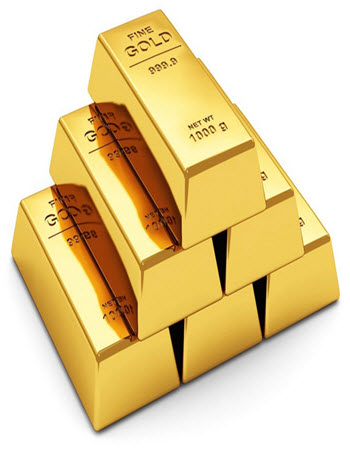
Examples of commonly traded commodities:
- Agricultural commodities, such as cotton, sugar, coffee, cocoa, corn, wheat, and soybeans.
- Livestock and meat commodities, such as pork bellies, lean hogs, live cattle, and feeder cattle.
- Metals, such as gold, silver, platinum and palladium.
- Energy, such as crude oil, natural gas, heating oil and gasoline.
Commodities are traded both on and off exchanges. Exchange trading will often require a high degree of standardization, both when it comes to parcel sizes and the standard of the commodity. Traders must have enough confidence in the commodities to be willing to buy them without doing their own inspection. While many stock exchanges have several hundred listed stocks, commodity exchanges tend to only contain one or a few commodities.
Commodities can be purchased both as an investment by an investor that predicts that the commodity price will go up and by producers who want to hedge themselves against future price fluctuations. Investing in commodities can be very profitable for an investor, and it can be absolutely vital for a company to be able to hedge themselves against unexpected price fluctuations.
Commodity Trading
Commodity trading isn’t new. It’s one of the oldest forms of commerce on earth. Long before stocks or crypto or forex, people were trading commodities such as wheat, gold, silver, and coffee beans. These are raw goods that fuel economies and move across borders, and where prices respond to everything from weather to war.
Today, you can speculate on commodity prices from your phone — no warehouses, no cargo ships, no physical barrels or sacks required at your end. But the stakes are just as real. Prices still jump on supply shocks, collapse on oversupply, and react violently to global news. And the traders behind these moves? They’re an eclectic mix of farmers, governments, corporations, funds, day traders, and more.
Commodity trading isn’t about predicting the future of a specific company. It’s about understanding what’s happening on the ground, in the fields, at the refineries, and how that ripples through price. You’re speculating on price movement, trying to predict whether oil will go up after an OPEC announcement, whether corn will drop after a strong harvest, or whether gold will rally if inflation spikes. The appeal is clear: fast-moving markets, real-world impact, and the chance to profit from things that don’t care about earnings reports or analyst upgrades. But with that comes a learning curve. These assets are volatile, sensitive, and driven by factors that don’t always show up on a candlestick chart.
Short-term traders look for volatility, breakouts, news reactions. Longer-term investors might trade seasonality, macro trends, or inflation cycles. Commodity trading fits both — but only if you understand what you’re trading and why it moves. Each commodity has its own quirks, news cycle, and price behavior. You can’t treat oil like gold, or corn like copper — they move for different reasons, on different schedules, and often in completely opposite directions.
Commodity trading is not forgiving. These markets can move fast — and when they do, the swings are big. Leverage is common, e.g. with futures and CFDs, and it cuts both ways. You need to manage risk with more than just stop losses. You need to understand when a market tends to move, why it’s moving, and whether the volatility is driven by short-term noise or a structural shift. Position size, timing, and awareness of key data releases (like inventory numbers, USDA reports, or weather updates) are part of the game.
How People Speculate On Commodity Prices
There’s no single way to trade commodities. Some traders use commodity futures, buying contracts on exchanges with specific expiry dates and margin requirements. Others use commodity options, which gives them more flexibility and limited downside.
Some of these large and standardized commodity contracts trade on major exchanges like the CME, ICE, or NYMEX
Retail traders often use Contracts for Difference (CFDs), which mimic commodity price movement without needing a futures account. With a CFD, your broker is also your counterpart in the trade.
Indirect Exposure to Commodity Prices
ETFs and commodity-linked stocks can provide indirect exposure. Example: Instead of trading crude oil directly, you can buy shares of an oil producing company or invest in an ETF that tracks the Brent Crude Oil price.
Commodities
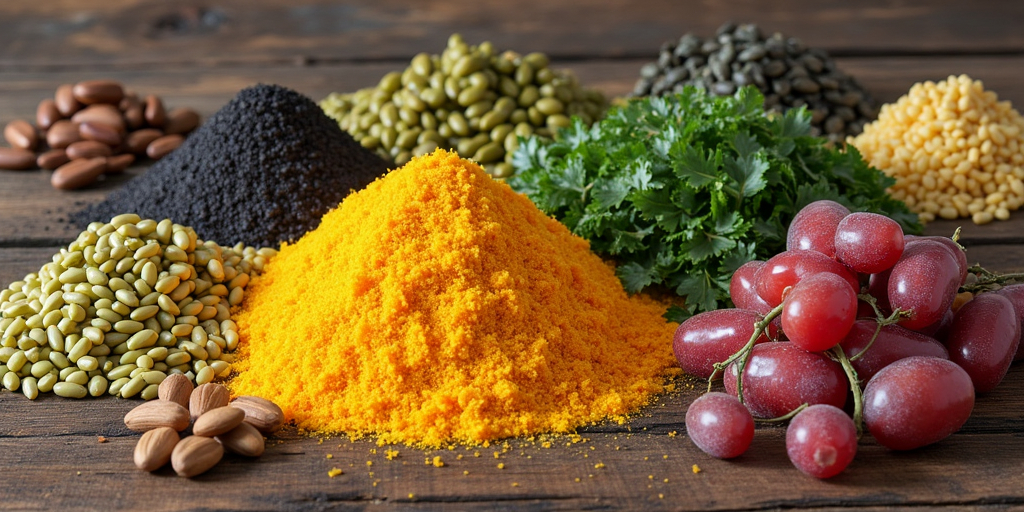
Commodities can be broadly categories into two groups: hard commodities and soft commodities.
Hard commodities are usually mined or extracted. Think crude oil, natural gas, and metals.
Soft commodities tend to be grown, e.g. wheat, cotton, cocoa beans, and orange juice.
Energies
Energies is a subset of the hard commodities. Under this headline your will find commodities such as crude oil, natural gas, heating oil — and sometimes also coal or even uranium, depending on the trading platform. These markets react to global supply and demand, geopolitical risks, storage data, and economic growth. They can be brutal in volatility, especially when there’s war, sanctions, or unexpected production cuts.
Precious Metals
This is another hard commodity subcategory. Examples of precious metals are gold, silver, platinum, and palladium. Gold is often a safe-haven play — strong when fear is high, weak when interest rates rise.
Non-Precious Metals
Example of non-precious metals are copper, nickel, aluminum, and lead.
Agricultural Commodities
The soft commodities are also known as agricultural commodities. Examples of agricultural commodities are wheat, corn, soybeans, sugar, coffee, cocoa, cotton, and livestock like cattle and hogs. Agricultural commodities tend to be weather-sensitive, seasonally driven, and often hit by sudden news like droughts, floods, or changes in government subsidies.
The Traders
The commodity market attracts are a mix of hedgers and speculators. Many of the hedgers are the farmers, mining companies, airlines, energy producers, manufacturers, and food processors who use the commodity market to lock in prices and manage risk. Speculators are the ones who aren’t in the business of producing or using the commodity — they’re just looking to profit from price movements.
This mix creates a unique dynamic. You’ve got people trying to reduce risk and volatility, and people trying to chase movements that can be turned into a profit – all using the same instruments. That’s part of what makes commodity markets unpredictable. You’re not just trading sentiment or technical levels — you’re trading against producers, hedge funds, and sometimes even governments trying to control or stabilize prices.
What Moves Commodity Prices?
If you’re used to stocks, this part feels different. Commodities don’t care about quarterly earnings. They move on supply and demand of something physical, and anything that affects either can impact the price of a commodity. For crude oil, that could be an OPEC production cut, refinery shutdowns, or geopolitical tension in the Middle East. For grain, it could be weather patterns, planting conditions, harvest reports, or export bans. For metals, it might be industrial output, mining disruptions, or shifts in global manufacturing demand.
Even adjacent factors, such as shipping, storage, and logistics can move commodity prices. If supply chains get clogged or freight costs surge, those costs ripple into the commodity itself.
Then there’s the dollar. Since most commodities are priced in USD, a strong dollar tends to push prices down — and vice versa. Interest rates matter too, especially for gold and silver, which tend to become less attractive when real yields are rising.
The bottom line: commodities react fast, often violently, and almost always to real-world events. Technical analysis helps, but context is king. Each commodity is sensitive to its own set of factors, and needs to be studied independently. You can not expect silver to move like natural gas, and vice versa.
Example: Cocoa
The annual trade in cocoa and cocoa preparations exceeds 50 billion USD, according to data from the Observatory of Economic Complexity. On the global market, the focus is on three different types of cocoa beans: Forastero, Criollo, and Trinitario. All of them can be processed to make cocoa powder and cocoa butter.
Supply
Cocoa is a soft commodity. It is also an agricultural commodity and a tropical commodity. Cocoa beans are grown in humid, tropical locations. Examples of important growing regions are West Africa (especially Cameroon, Côte d’Ivoire, and Ghana), northern South America (especially Ecuador and Brazil), and South East Asia (especially Indonesia and Papua New Guinea). As of 2023, roughly 80% of the world´s cocoa output came from West Africa.
The cocoa price tend to rise based on factors that indicate a future cocoa shortage, such as harvest reports and adverse weather events in important growing regions. If we look in our near past, we can see how a global cocoa shortage began in early 2024, sending prices upwards. The shortage was caused by a combination of factors, including climate change and plant disease pressure which decimated cocoa crops in West Africa. Analysts looking deeper also pointed out problems arising from a insufficient investments in cocoa farms in West Africa, and how recent increases in farm gate prices had not remedied this. In West Africa, cocoa beans are still largely grown by smallholder farms, many of whom are struggling to make a living from their crops. This, which is a chronic problem rather than some recent event, means that farm owners do not have enough resources to reinvest in their farms, which in turn results in lower yields over time. Notably, too few cacao trees are planted to replace disease ridden ones.
Example: Coffee Beans
Supply
In the year 2023, the world production of green coffee amounted to 11.1 tonnes. The major producer by a wide margin was Brazil, where over 30% of the world production was grown. The only other country that produced more than one million tonnes was Vietnam, where slightly less than two million tonnes were produced, i.e. almost 18% of the total world production. All the other producers grew less than 800,000 tonnes each, which means that the rest of the coffee production is scattered over many different countries. South America is a very important region and over 40% of all coffee is grown here. South-East Asia makes 27%, Africa 17%, and Central America 10%.
The international trade in coffee is focused on two varieties: Arabica and Robusta. Arabica is less bitter, and mostly grown in South and Central America, as well as in parts of East Africa. Arabica is often grown in tropical countries but at high altitudes where the climate is milder. Robusta contains more caffeine and tastes more bitter. It is chiefly grown in Asia and Africa, typically at lower altitudes. Roughly 75% of the world´s coffee production is Arabica.
Arabica coffee plants grown in Brazil is exhibiting a noticeable biennial cycle, and the coffee prices move along it. A bumper crop season causes prices to go down, and is then following by a lower yield season when the coffee price goes up.
It is easy to realize why the coffee price can be severally impacted by sociopolitical events and the weather in the major growing regions. Sociopolitical turmoil, e.g. riots or coups, can cause problems for both farms, coffee logistics, and wholesale buyers, causing the coffee price to go up. The same is true for natural disasters that can cause issues even when they do not directly impact the coffee growing areas. Of course, there is also weather that has a direct impact on the coffee farm. This crop grow on small trees, and it is sensitive to frost and prolonged droughts.
Less intuitive is the connection between coffee prices and oil prices. The two major exporters of coffee – Brazil and Vietnam – are both located far away from the major import markets. Because of this, transport costs matters a lot, and when the crude oil price goes up, the coffee price tend to follow to some degree.
Demand
If you plan on speculating on the coffee price, it is good to know that coffee consumption tend to peak during the part of the year when it is cold in temperate parts of the northern hemisphere. It is also worth nothing that when the market expects discretionary income to drop in major coffee import economies, such as the United States and the European Union, coffee prices tend to go down. That is why data such as the release of non-farm payrolls in the United States can cause a sudden spike or drop in the green coffee price.
Example: Platinum
The dominating markets for platinum trading are the New York Mercantile Exchange (NYMEX) and the London Platinum and Palladium Market. On the spot market, platinum has the code XPT, and for transactions settled in U.S. dollars the code is XPTUSD.
Two major markets for platinum futures are NYMEX and the Tokyo Commodity Exchange (TOCOM). The minimum contract size is 50 troy ounces at NYMEX and 500 grams at TOCOM.
Supply
Platinum enters the platinum market in two major ways: from mines and through recycling. For platinum to be fit to be sold on the commodity market, it needs to be turned into ingots, which are then assayed and hallmarked.
In an average years, roughly 75% of all mined platinum is mined in South Africa, so issues that impact mines or logistics in South Africa can have a major impact on the commodity price for this precious metal. Example: The platinum price peaked in March 2008, reaching 2,252 USD per troy ounce, and this boost was largely driven by power delivery problems impacting mining operations in South Africa. Before the year was over, the price had fallen down to less than 775 USD per troy ounce.
Demand
The demand for platinum tend to go up during periods of sustained economic growth, especially if the motor vehicle industry is doing well. Roughly 45% of the platinum sold in a year is used for vehicle emissions control devices, which means the demand for platinum tend to follow the demand for new vehicles. The other major use for platinum is jewelry, and roughly one third of all platinum sold in a year goes to the jewelry industry – another industry that, just like the automotive industry, can be fairly sensitive to general economic cycles. Chemical production and petroleum refining use less than 10% of the sold platinum, and electrical applications such as computers only account for a few percent.
Commodity Trading Instruments
When you hear someone’s trading commodities, they’re probably not hauling oil barrels or hedging a wheat crop. They’re more likely to be trading financial instruments that give them exposure to the price of the commodity without ever touching or even owning the physical stuff. In essence, these contracts are a bet on how the market price of the commodity will move.
There’s more than one way to get this type of exposure to commodity prices, and each comes with its own structure, cost, risk, and learning curve. Futures might be the most traditional, but they’re not always the most accessible. Options add flexibility. CFDs have become very popular among retail traders, while swaps are favored by professional institutional traders. ETFs are give a more indirect exposure. And then there’s the wildcard — binary options — which is an all-or-nothing type of derivative. (In many parts of the world, brokers are not permitted to offer binary options to retail traders.)
If you want to trade commodities with any consistency, understanding what instrument you’re actually using is non-negotiable.
Futures
Commodity futures are the backbone of modern commodity markets. These are standardized contracts traded on exchanges like the CME Group or ICE that lock in a future delivery date and price for a specific amount of a commodity. The idea is simple: you’re agreeing today on the price you’ll pay (or receive) for a commodity at a set date in the future.
The vast majority of traders do not hold the contract until delivery. They’re in it for speculation — buying and selling contracts as prices move, exiting before expiry. It’s fast, liquid, and efficient. But it also comes with margin requirements and the need to manage leveraged positions in real time.
Options on Futures
If futures are about commitment, options are about choice. An option gives the holder a right — but not the obligation — to buy (call option) or sell (put option) a futures contract at a specific price, before a set expiry date. You’re paying a premium for that right, and if the trade doesn’t go your way, you can let it expire and walk away.
Commodity options let you trade direction, hedge existing positions, or profit from volatility without locking in a hard loss beyond the price you paid for the contract. For experienced traders, this adds a strategic layer — letting you build positions with controlled downside, layered exposure, and more creative setups than just long or short.
But options pricing isn’t simple. Time decay, implied volatility, and strike selection all affect what you pay and what you stand to gain. If you’re not tracking these variables, you’re flying blind — and probably overpaying.
Contracts for Difference (CFDs)
CFDs are one of the most popular instruments among retail traders — mostly because they’re easy to access and don’t require a futures account. When you trade a CFD, you’re not trading a real commodity contract on a market comprised of other traders. You’re trading a synthetic product that mirrors the price of the commodity, and this contract is usually offered by the broker, who will be your counterpart in the trade.
You can go long or short, use high leverage, and get in and out quickly. But do not forget that you are trading against the broker, not on a centralized exchange. There is a built-in conflict of interest, which can result in price manipulation or other dishonest practices unless you broker is 100% top-notch.
The good brokers keep things transparent and align closely with spot or futures prices. The bad ones? Since the broker will profit when you lose on a CFD, dishonest brokers stack the deck accordingly.
CFDs work well for short-term speculators who don’t need to hold overnight or deal with expiry. But they’re not built for long-term investors, and they carry hidden risks if you’re not watching the fine print.
ETFs: Fund Shares
If you want to invest in commodities without trading contracts, commodity ETFs are the easy option. With a traditional mutual fund, shares are normally only traded once a day. With an exchange-traded fund (ETF), the shares are listed on an exchange and traded throughout the trading day, in a fashion vry similar to stock trading. This makes it easy to open and close positions, and you can even engage in day trading.
Many different ETFs are available, depending on which type of exposure the investor wants. The most famous type is the ETF that invests in stocks, but several other niches are available as well – including ETFs that track commodity prices.
An exchange-traded fund can aim to track the price of a commodity in various ways, e.g. by investing directly in the commodity or by using commodity futures and/or other derivatives. There are also ETFs that will give you indirect exposure to the commodity price, since they invest in companies in that sector.
Examples: A gold ETF might for instance hold actual bullion or gold futures contracts, or a combination of both. An oil ETF might track the front-month WTI contract or spread exposure across multiple expiries. You can also find ETFs for commodity indexes.
The benefit here is simplicity. You buy it like a stock, hold it in your brokerage account, and avoid margin, leverage, or active position management. The downside? You’re not getting pure price exposure. You’re getting a managed product that may not track the underlying commodity exactly due to fees, contango effects, or rolling costs. You will be paying fund management fees.
For long-term investors or traders who want exposure but don’t want to deal with futures mechanics, ETFs offer an appealing solution. But for short-term trades or precise directional bets, they’re usually too slow or imprecise.
Forwards and Swaps: The Institutional Players
Forwards are like custom-made futures. They’re negotiated directly between two parties and built to fit specific needs. A farmer might sell corn at a fixed price to a processor months in advance. An airline might lock in fuel prices for the year. These contracts aren’t accessible to retail traders, but they shape the market behind the scenes.
Swaps are more complex. They involve exchanging cash flows based on commodity price movements — often used by large energy companies, utilities, and banks to manage longer-term risk.
You won’t find commodity forwards and commodity swaps on a standard retail trading platform, but they matter. When oil moves big, or when natural gas spikes on weather news, it’s often the result of swap positions being adjusted or rolled. Understanding how these instruments work — even if you don’t trade them — gives you a better read on why prices shift the way they do.
Binary Options
Binary options are the stripped-down version of trading. You don’t care how far a commodity moves — just whether it’s higher or lower than a target price at a specific time. If your prediction is correct, you get paid a predetermined amount. If you prediction is wrong, you lose the entire stake. There’s no margin call, no partial loss, no trailing drawdown. You either get paid the full, predetermined payout or lose the full stake.
Binary options are available for a wide range of underlying assets and products, including commodities. When you trade commodity-based binaries, you’re speculating on price direction over short time frames — minutes, hours, sometimes days.
Retail traders tend to favor very short-term binary options, and many binary options trading platforms focus heavily on that type of binary options; sometimes offering binary options with a lifespan of less than a minute.
The simplicity of binary options attracts retail traders, but it also creates problems. Just as with CFDs, your broker is also your counterpart – and now you are locked into a deal where your counterpart stands to get your entire stake or be forced to pay you a profit of 80% or more (depending on the terms of the binary option). Many owners of binary options platforms have not been able to handle this conflict in a reputable manner and have resorted to price manipulation to ensure they come out on top.
Around the world, a lot of the stricter financial authorities – such as FCA in the UK, ASIC in Australia, and CySEC in Cyprus/EU – prohibit brokers from marketing, offering and selling binary options to retail traders (non-professional traders) due to a variety of reason. It is therefore difficult to find any reputable broker, regulated by a serious financial authority, if you are a retail trader looking for binary options. Many binary options platforms are unregulated or regulated in jurisdictions known for their lax trader protection. Pricing can be opaque, execution can be manipulated, accounts can be frozen randomly, etcetera.
Examples of problems with binary options:
- The math is not in your favor. When you are wrong in your prediction, your counterpart gets 100% of your stake. When you are right in your prediction, you will not get a 100% profit. Instead, binary options typically pay a profit in the 75% – 90% range.
- A classic binary options is exactly that: binary. The outcome is binary: make a profit or lose it all. There is no stop-loss or take-profit level. You can not watch the market move against you, hit the brakes and save 90% of your stake. When you lose, you always lose everything, and this makes binary options extremely high risk.
- Many binary options platforms heavily focus on and push strongly for very short-term binary options. Combined with the binary nature of this derivative, it can create an environment that is more similar to a casino than a trading floor. Put $100 on red at the roulette table and wait 30 seconds to see if you get double or nothing. Or put $100 on a gold binary option and wait 30 seconds to see if you get 80% profit or lose it all.
- Because the field became so rife with scammers, many of the stricter financial authorities around the world decided to outright ban all brokers from selling binary options to non-professional traders, and told all retail clients to simply stay away from binary options. As a consequence, it is now even more difficult to find a trustworthy binary options broker and avoid the shady ones.
You can learn more about binary options, their strenghts and weaknesses by visiting BinaryOptions Net
Different Types and Styles of Commodity Trading
Commodity trading sounds straightforward, but once you step into the market, you quickly find out there’s more than one way to speculate on these assets. And depending on how you trade, why you trade, and what your time horizon looks like, your entire approach changes. Some people scalp oil charts by the minute. Others hold gold for years as a hedge against inflation. Some trade coffee futures based on harvest reports. Others use options to structure risk around natural gas. The point is: commodity trading isn’t one thing. It’s a whole mix of strategies, timelines, and goals — all reacting to real-world forces.
Here’s how the major styles of commodity trading break down — not just by time frame, but by mindset and method.
Short-Term Speculative Trading
This is where most retail traders start. You’re looking for short-term price movements, not long-term exposure. You’re not hedging a harvest or managing energy costs — you’re reacting to price swings and trying to capitalize on momentum.
Many traders in this category are day traders. This means all positions are opened and closed within the same trading day. No positions are left open over night, so you do not have to worry about over-night risks and overnight fees. You can learn everythin gyou want to know about day trading by visiting DayTrading.
Short-term traders typically rely a lot on technical analysis. They are utilizing price charts, watching trendlines, breakouts, candlestick patterns, moving averages — all the tools designed to spot price direction in the short term.
Short-term trades are often placed through commodity CFDs, commodity futures, or commodity options.
Remember: You’re trading short-term volatility, and that requires tight risk control. It’s fast, it’s reactive, and if you’re not disciplined, it’ll drain your account very fast.
Swing Trading Commodities
Swing traders aim to profit from swings in the market that will run through days or weeks, sometimes even a few months. You’re not jumping in and out within minutes, but you’re also not holding through entire yearly cycles. This style is about catching momentum; enough time for a trend to develop and give you a profit. Maybe oil’s breaking out on tightening supply. Maybe copper’s rallying off improved industrial demand out of China. Maybe corn is trending lower into a surplus report. You’re not glued to every tick, but you’re watching longer time frames, tracking data releases, and aligning trades with broader moves.
Swing traders often use a blend of technical analysis and fundamental analysis. You’re still charting your entry and exit points, but you’re also keeping an eye on the news cycle, government reports, and sector sentiment. This style is popular because it offers balance. It’s active enough to keep you engaged, but do not require intense trading sessions. And with commodities, which are naturally volatile, swing trading often hits that sweet spot between reaction and patience.
You can learn more about Swing Trading by visiting the website SwingTrading.
Position Trading
Position traders are operating with a longer time-frame than the swing traders. They’re not chasing five-day trends or reacting to chart noise. They’re typically building trades around themes — inflation, geopolitical instability, droughts, energy demand, industrial cycles. You’re not just looking at price chart patterns. You’re building a thesis — and then holding your ground while it plays out. You might for instance decide to short wheat because of surplus forecasts and good planting weather.
This style is closer to investing than trading, but is still short-term and active enough to be considered trading. You might be long gold because of sustained inflation risk, but you are not becoming a long-term buy-and-hold investor in a South African gold mine.
As position traders tends to keep positions open for months at the time, you will be dealing with rollover costs, seasonal cycles, and major macro events. You’re probably trading smaller position sizes, waiting for large and sustained price movements to bring you a nice profit even on a comparatively small position. Day traders will often open huge positions, or a very large number of positions, since they need to profit from minute price movements. You are not about that.
Position trading isn’t about excitement. It’s about conviction and capital preservation. You’re playing the long game — and that requires both patience and a deep understanding of what drives the commodity you’re trading.
Event-Driven Commodity Trading
So many things can impact a commodity price, including sudden news events on the other side of the world or the well planned release of statistic data from a governmental agency. Prices can for instance react to an OPEC meeting, a USDA report, a central bank announcement, a sanctions headline, or a major weather event or weather forecast.
Event-driven commodity speculation isn’t about the chart; its about understanding how the market will react. You might know beforehand that the catalyst is coming, so you have a thesis, and you structure the trade ahead of time — maybe with options, maybe with a tight entry and exit plan — and execute with precision at the precise moment. Or, you are well-aware of the risk of destructive cold fronts in Brazil or political instability in South Africa, and you have created a solid plan in advance, not knowing exactly when the time will be right to execute it.
Event trading is high risk. Markets spike, spreads widen, slippage increases, and market psychology takes its toll. But it’s also where some of the fastest profits happen — if you’re on the right side and you can manage the chaos. It’s not a style for every day. But when timed right, it can be a strong addition to a broader strategy.
Hedging and Commercial Trading
Not everyone in the commodity market is trying to make a profit from price movement. Some are just trying to manage risk — to keep the business running without getting crushed by volatility. A wheat farmer might sell futures to lock in prices ahead of harvest. An airline might buy oil futures to secure fuel costs for the next quarter. A coffee distributor might use options to protect against a sudden price spike in green coffee beans. These are hedgers, and they make up a huge part of the commodity market. These traders care about predictability. They use derivatives not to speculate, but to stabilize cash flow and avoid disaster when prices move against their business model.
As a retail trader, you probably won’t be hedging crops or oil shipments. But understanding how these players move — and when they hedge — gives you a massive edge. These flows create trends, trigger reversals, and affect volatility in ways many short-term traders never see coming.
Arbitrage and Statistical Trading
This one’s less accessible to retail traders but still worth understanding. Arbitrage traders look for price inefficiencies between different markets, products, or timeframes. Maybe gold futures in New York are mispriced against spot prices in London. Maybe natural gas contracts in two different months are out of line due to storage data. These traders use math, models, and speed. They’re often running algorithms, exploiting small edges with large volume, and closing trades in seconds or minutes.
Online Commodity Speculation
It’s one thing to understand how commodity prices works. It’s another to find a broker that gives you fair access, solid pricing, and a platform that doesn’t crash the second volatility kicks in. And with so many choices — from futures platforms to CFD providers to options brokers and everything in between — the problem isn’t a lack of access. It’s knowing where to look and who to trust.
Here’s how to figure out where to trade commodities, and more importantly, how to find the right broker for your trading style.
Finding a broker for commodity trading isn’t about picking the “best” one on a list. It’s about choosing the right one for how you trade. Are you scalping oil on one-minute charts? You’ll need fast execution and tight spreads. Are you holding agricultural positions based on seasonal supply cycles? You’ll want futures access and margin transparency. Are you building a portfolio with gold and metals exposure? Go with ETFs or funds on a stock platform.
Whatever you choose, make sure it’s not just convenient — make sure it’s credible. Because when markets go sideways and you’re deep in a trade, the last thing you want is to wonder whether your broker is working with you or against you. You’ve already got enough risk in the market. Don’t add more by trading on a shitty platform or with a shady broker.
First, Know What You Want to Trade — and How
Before you start comparing brokers, get clear on what kind of commodity trading you’re actually trying to do. Are you scalping short-term price moves in oil? Swing trading gold with technical setups? Investing in soft commodities like coffee or cocoa based on seasonal cycles? Are you using futures, CFDs, options, or ETFs?
Not every broker offers every product, and the terms and conditions will also differ between different brokers offering the same commodities and instruments. Therefore, you need to find a broker that offers excellent conditions for your particular commodity and trading style. Some brokers are ideal for spot trading, some specialize in futures and options, others only deal only in CFDs, and some are great for buying ETFs and investing in commodity-driven stock companies. You don’t need the broker with the biggest selection — you need one that is great for your your setup and give you the tools you need.
Get specific in your search. If leverage is part of your trading strategy, that narrows the field. If you’re holding long-term positions, that changes what matters — execution speed become less critical than rollover costs and swap rates.
Futures Brokers
If your plan is to trade standard commodity contracts — like oil, gas, corn, wheat, or metals — the most direct route is a futures broker that can connect you to the prices quoted at exchanges like CME Group, NYMEX, ICE, or EUREX – exchanged where professional and institutional traders move real volume.
Futures brokers give you the cleanest exposure to commodity prices. You’re trading standardized contracts with real expiry dates, real tick values, and actual margin requirements — not a broker-invented replica like the CFD.
The upside: you’re in a regulated, transparent market with deep liquidity and fast execution. The downside: it’s not beginner-friendly. You need a funded margin account, and you’re exposed to leverage and risk on every tick. Expect to go through application and approval, and make a substantial deposit. They don’t just hand you a live account because you watched a YouTube video and decided commodity futures looked cool.
Options Brokers
If you’re looking to structure trades with more precision — control your risk, speculate on volatility, or hedge a futures position — commodity options might be right up your alley.
You’ll need a broker that supports options on commodity futures (like gold, crude oil, soybeans, etc.), not just equity options (stock options), and that narrows the list considerably. You also want to make sure that this is a broker and trading platform that will give you access to the type of high-quality analytical tools that will help you use commodity options properly.
Options on commodity futures will give you flexibility, but the learning curve is sharp when it comes to option valuation. You’re trading time, volatility, and probability — not just price direction. If you’re not comfortable managing multiple variables, stick with simpler instruments.
CFD Brokers
Contracts for Difference (CFDs) are popular because they’re simple and flexible, and you can go long or short on a big variety of commodities like oil, gold, silver, coffee, or natural gas. You don’t own anything — you’re just trading the price difference between when you enter and exit.
CFDs are offered by a lot of retail-friendly brokers that are easy to open an account with. You can usually trade with small position sizes, flexible leverage, and fast execution. You do not need a lot of money to get started, since beginner-friendly retail brokers normally accept a small first deposit and allow you to open small trades.
That accessibility comes at a cost. You’re not trading on an exchange — you’re trading against the broker. Just as with binary options, there is a conflict of interest. If the broker isn’t trustworthy, you’re exposed to all kinds of games — price manipulation, slippage, order rejections, or sudden margin changes.
It is also worth mentioning that a lot of novice commodity traders go astray when they get access to leverage. CFDs are offered with leverage, and if you can not handle this in an appropriate manner, you will burn through your bankroll quickly. Many beginners are attracted to CFDs because of the leverage, but fail to establish an appropriate risk-management plan that takes leverage into account. On the notoriously volatile commodity markets, this spells disaster. In some countries, the financial authorities have found it necessary to put in caps for how much leverage CFD brokers are permitted to extend to retail traders, and mandatory Negative Account Balance Protection is also common.
Before you use any type of leverage, make sure you understand exactly how it works. Adjust your risk management routine to accommodate for the use of leverage. Start with very small leverage. Find out if your account has Negative Account Balance Protection, and if the answer is yes, exactly what that entails. e.g. when it comes to automatic position closing.
The good news is that if you pick CFDs instead of binary options, you can use a broker that is regulated by a strict financial authority with strong trader protection, such as UK FCA, ASIC, BaFin, or CySEC oversight. Do not be lured in by vast leverage and huge welcome bonuses for retail traders, because those are warning signs telling your that the broker is most likely not regulated by any of the strict financial authorities.
Stocks and ETFs
If you are interested in getting a less precise but also less volatile exposure to commodity prices, take a look at stocks and/or exchange-traded funds (ETFs).
With stocks, you can pick and chose between the many companies that are active in the world of commodities, and put together your own portfolio of handpicked corporations that you have long-term faith in. You can also be a daytrader, swing trader, or position trader of stocks.
Handpicking stocks can make it difficult to achieve a high degree of diversification, and this makes your portfolio more volatile and risky. To avoid this, many beginners start by investing in exchange-traded funds with commodity exposure instead. As mentioned above, ETFs are funds where the shares are listed on an exchange and traded throughout the trading day. You can be a day trader, swing trader or position trader if you want, but ETFs are also suitable for long-term investments. Even if you only have a small amount of money to invest, you can achieve a high degree of diversification by picking a diversified ETF. That way you will not have a heavy exposure to just one or two stock companies in the gold, silver, or crude oil sector.
The range of available ETFs is huge, and it does not only include ETFs that invest in stocks. ETFs can achieve exposure to commodities in several different ways, so you need to read the prospect before you invest. You also need to make sure that you understand the roll costs and fund fees.
Some ETF are designed to track the commodity price very closely, and they can for instance own commodity futures or physical commodities. Others invest in the stock market and have a more indirect relationship with the commodity price.
Some ETFs track a specific commodity, e.g. gold, while others track a basket of commodities, e.g. a basket of precious metals or a basket of agricultural commodities.
If you plan on investing more long-term or prefer to speculate short-term can impact which broker and platform that is best for you when it comes to EFTs and stocks. A broker that is great for daytrading might have crazy overnight costs that make them unsuitable for longer-term holdings, and so on.
Examples of Broker Red Flags
There´re only in it for the kickback
You might think you have found a broker, but you are actually just being mesmerized by a third party that gets a kickback if they send you along to a particular broker platform. This is especially common for binary options platforms. You will probably be pushed to use a very specific link to sign up, and the platform will not be on the same site as the “broker” that seems so promising.
Sound to good to be true
Commodity speculation is inherently risky. Stay away from brokers that try to downplay risk or give vague promises about “guaranteed profits”. How much do you think those promises will be worth when you have burned through you account balance?
This kind of behavior is fairly common with unregulated brokers and brokers regulated by lax financial authorities. The lack of supervision means they can continue to make false promises and never be forced to actually honor any guarantees.
Poor regulation
- Avoid brokers that are unregulated.
- Avoid brokers where the legal situation is opaque and/or very complex.
- Avoid brokers licensed by financial authorities known to be lax and not have any strict trader protection. (Some have strict rules on the books, but will not enforce them.)
Picking a broker that is regulated in your country creates jurisdictional clarity, and you may even be protected by a governmental scheme that reimburses traders and investors if the broker fails to uphold its obligations due to insolvency. For traders in the European Union, it is enough to pick a broker regulated in any of the membership countries.
If you live in a country where the financial authority does not license online commodity brokers or do not provide strict trader protection, you might be better off picking a broker licensed abroad – as long as it is licensed by one of the strict authorities. The question of jurisdiction will be more muddy and your money will probably not be protected by any government protection program, but at least you will be able to report issues with your broker to an authority that is willing and able to investigate and take action.
Poor reputation
Every broker will have some disgruntled traders who are posting angry reviews. Emotions run high when money is risked and lost, and a broker having only five-star reviews online is actually more of a warning sign. With that said, try to find independent reviews and look for recurring themes. Are many traders getting their withdrawal requests blocked? Is the KYC check nearly impossible to pass when it is time to make a withdrawal, even for traders who have passed KYC checks with other brokers without issue before? Do you see many complains, over time, about the customer support not being available or not being unhelpful? Does this broker have a tendency to change leverage rules or spreads in an erratic manner? Is is impossible to see order execution records?
You can avoid falling for all these red flags by reviewing the brokers on Brokerlistings before opening an account.
This article was last updated on: May 5, 2025